
Hosting for the senses, not the camera

Updated: Feb 3
Before anyone arrives, we lower the lights and remind ourselves who this gathering is for.
There is a particular tension that lives in modern hosting. Between what is felt and what is shown. Between the table as it is experienced, and the table as it appears.
Somewhere along the way, gatherings began to perform. Chairs were moved for symmetry. Dishes waited to be served until they looked right. Moments paused, not for breath, but for proof.
Yet the most memorable evenings rarely look remarkable from a distance. They live closer to the body. In warmth. In sound. In taste. In the way time loosens when no one is watching it.
The sensory art of hosting
Hosting for the senses is an intentional choice. A quiet refusal to let the camera dictate the mood. It asks us to return to what gatherings were always meant to be: shared experiences, not staged scenes.
The senses are honest.
They cannot be edited.
Light, for instance, is felt before it is seen. Harsh brightness keeps people alert, composed, slightly guarded. Softer light invites shoulders to drop. Conversation to slow. Lamps turned on early, candles lit not for effect but for ease; these are choices that prioritize comfort over clarity.

Sound works the same way. Music does not need to impress. It needs to support. Something familiar. Something low enough to allow pauses. Silence, too, is welcome. The quiet between voices often carries more intimacy than constant noise.
Then there is touch. The weight of cutlery. The texture of linen. The chair that does not require adjusting. These details rarely photograph well, but they shape how the body settles into a space. A lived-in home understands this. It chooses objects that feel good to use, not just good to display.
Let the senses lead the way
Hosting for the senses means letting go of rigid plans. Food does not need to arrive all at once. Plates do not need to match. A meal can unfold slowly, allowing people to serve themselves, to return for more, to linger without interruption.
Taste is deeply tied to memory. A simple dish, cooked with care, often leaves a deeper impression than something elaborate served under pressure. Warm bread. Soup shared from one pot. Dessert passed around without ceremony. These are experiences the body remembers long after the image fades.
Smell is perhaps the most powerful sense in the home. It is immediate and emotional. Clean air. Wood. Citrus peel. Something gently simmering.
Hosting for the senses means being mindful of this, choosing scents that ground rather than overwhelm. Avoiding anything too sweet, too loud, too performative.

The rhythm of hospitality: allow time to unfold naturally
And then there is time. True hospitality does not rush. It allows moments to unfold naturally. Guests arriving early are welcomed, not managed. Those who linger are not subtly reminded of the hour. The evening finds its own rhythm.
This is difficult when hosting becomes something to document. When attention shifts outward, toward angles and timing and presentation. The body feels it immediately. The host is distracted. The room tightens. People sense when they are part of an image rather than a moment.
Hosting for the senses asks the host to be present first. To trust the space. To allow imperfections to exist without correction.
A spill wiped quietly. A dish served warm instead of perfect. A chair added at the last moment. These moments humanize the gathering. They signal safety. They tell guests that they are welcome as they are.
Hosting for the soul: trusting the space, trusting the guests
Thoughtful hosting is not about removing effort, but rather placing it where it matters. Preparing enough so that you can let go once people arrive. Choosing fewer elements, but choosing them with care.
One candle instead of many.
One dish done well.
One table that feels generous, not arranged.
The lived-in home supports this approach naturally. It does not aim to impress. It holds history. It carries use. Its objects are ready to be handled, not preserved. When hosting is grounded in the senses, something shifts. Conversation deepens. Laughter becomes unguarded. People remember how they felt, not how it looked.
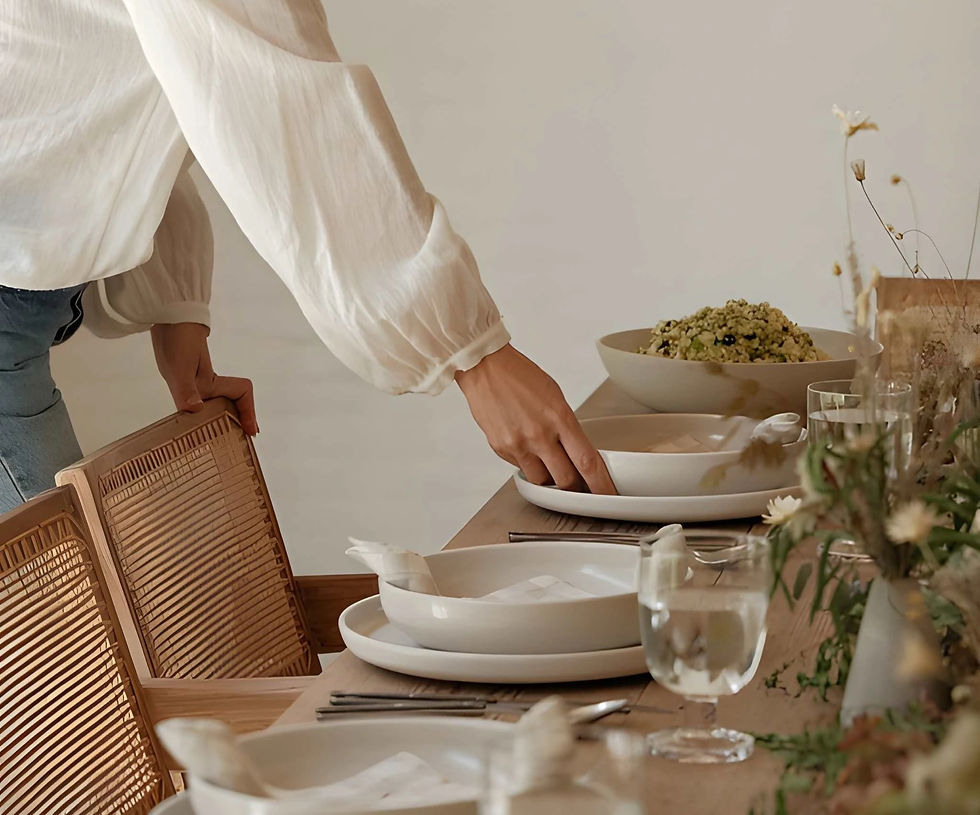
This is where meaningful gatherings live.
Not in the wide shot of the table, but in the moment someone reaches for more bread. In the pause before a story is told. In the quiet comfort of sitting together after the meal, without needing to do anything next.
Hosting for the senses is an act of trust. Trust in your home. In your guests. In the fact that presence is enough.
At FOYRA, we return often to this idea: that welcoming is not about control, but about care. About creating conditions where people can arrive fully, and stay that way.
So the next time you host, consider this your permission to step away from the lens. To dim the lights a little more. To serve the food when it’s ready. To sit down before everything is perfect.
The memories you make will not need proof. They will live where they belong — in the senses, in the body, in the quiet warmth of having been together.


Comments