
Letting the house breathe again: keeping only what supports the season
- Foyra

- Jan 4
- 4 min read
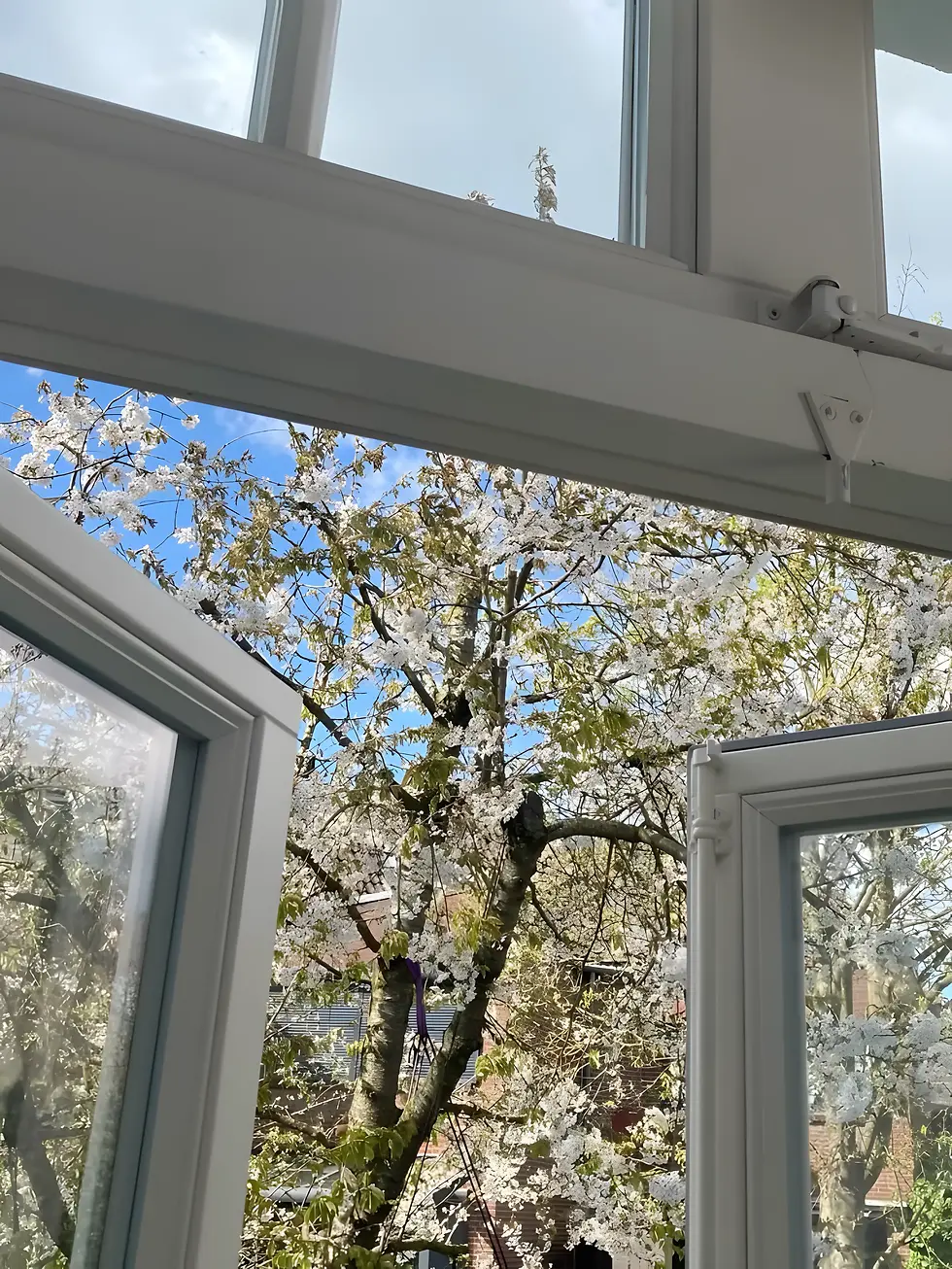
When the last candle has burned down, we begin by opening a window and listening to what the house asks for next.
After the festivities, the house feels full. Not cluttered, exactly, just held. Full of voices that have already left. Of plates stacked a little higher than usual. Of objects that linger past their moment. January arrives not to erase, but to soften. It lowers the volume. It stretches time. It invites us to notice what remains when the door finally closes and the quiet settles back in.
This is the season of letting the house breathe again.
Not through dramatic clearing or sharp resolutions, but through small, attentive gestures. A slow return to what feels supportive now. To what belongs to winter, to rest, to inward living.
Seasonal living, at its core, is an act of listening. To light. To temperature. To mood. To the way a space responds when we stop asking it to do everything at once. After weeks of hosting, celebrating, gathering, the home deserves care of its own. A gentle tending. A recognition that it, too, has carried others.
Let’s start with space
The first step is often space. Not empty space, but eased.
It might begin with surfaces. Clearing the dining table until the wood shows again. Folding away linens that won’t be used for a while. Returning borrowed warmth, extra chairs, extra dishes, extra layers, to where they rest best.
As you do, notice how the room exhales. There is something deeply grounding about putting things back into place. Not in a rigid way, but with gratitude.

Keeping only what supports the season is not about minimalism. It is about alignment. About asking what serves the rhythm of now.
Winter asks for fewer objects, but deeper ones. Fewer gestures, but more intention.
Heavy ceramics over glass. Wool instead of linen. Lamps turned on earlier. Throws placed where hands naturally reach. A chair pulled slightly nearer to the window.
These choices are quiet, but they shape how the home holds you, and letting go, in this context, is an act of care.
It may mean packing away items that belong to celebration rather than sustenance. Decorative objects that no longer feel grounding. Extra tableware that won’t be used for weeks. Even scents, sweet, spiced, festive, replaced by something cleaner, calmer, closer to skin and wood.
This is not a rejection of what was.
It is a seasonal bow.
The lived-in home understands transitions. It does not demand perfection, but it does respond to attention. When we take the time to adjust it, gently, deliberately, it gives something back. Ease. Warmth. A sense of being held.
Keep what is meaningful to you
There is also an emotional layer to this clearing.
After gatherings, after shared meals and long evenings, the house holds echoes. Of laughter. Of conversations that stayed late. Of moments that mattered.
Letting the house breathe again means honoring those memories without clinging to them. Trusting that they remain, even when the table is cleared.
Sometimes, this looks like letting go of one thing and giving space to something else. A handwritten place card tucked into a drawer. A candle stub saved for another winter evening. A dish that reminds you of a conversation. Meaningful objects do not need to be many. They need to be felt.

And what feels right
January is generous with time. It allows us to move slowly through these choices. To fold with care. To wipe shelves without rushing. To touch each object and decide whether it belongs in this chapter.
What supports the season now?
Perhaps it is a smaller table setting.
Perhaps it is fewer cushions, but thicker ones.
Perhaps it is leaving space on the counter for making tea without navigating around clutter.
These decisions are deeply personal. They cannot be prescribed. They emerge when we listen honestly to how the home feels at different hours of the day. Morning light. Early evening. The quiet before sleep.
Seasonal transitions ask us to meet our homes where they are, not where they were last month.
Let go, so rituals can land
There is a particular comfort in a home that knows winter. That does not fight it with brightness or excess, but leans into its depth. This is also a moment to care for the rituals that sustain you. The ones that don’t announce themselves. A bowl kept empty, ready to receive keys. A chair cleared so it’s always available. A shelf left bare enough to rest the eyes.
Ritual lives in repetition, but it needs room.
By removing what no longer supports the season, we make space for what does — even if we don’t yet know what that is. Space for new rhythms. For rest. For a slower kind of hospitality, often turned inward, inviting you to stay close.

Letting the house breathe again is not a task to complete. It is a practice to return to. One that honors change without urgency.
When we care for our spaces in this way, we mark time differently. Not by dates or goals, but by feeling. By noticing when something has run its course and gently setting it aside.
The house responds to this kindness. It grows calmer. More generous. More honest.
And in that softened quiet, we find ourselves welcomed again, not as hosts, not as planners, but simply as people living where we are.
This, too, is a beginning.
Comments