
Open shelving vs. Closed cabinets
Before storing or putting things away, notice how you want the room to feel when you walk in.
Storage is never merely about organisation. It shapes how we move through the space, how we use it and how we feel inside it.
Open shelving and closed cabinets are often discussed as design choices, but they are also daily rituals. They determine what we see, what we touch, and what we are reminded of.
Neither is better. Each creates a different relationship with the home.
Open shelves invite presence. Closed cabinets offer pause.
Both ask something of us in return.
Open shelving: the practice of seeing
Open shelving means living with what is visible.
Dishes, glasses, bowls, pantry jars, everyday objects, all part of the room, all part of the rhythm of daily life.

There is a sense of immediacy here. What you use is within reach. What you own is known. Nothing disappears completely. This can feel grounding, even reassuring.
Choosing a mug becomes a pause. Reaching for olive oil feels tactile, grounded.
The home feels active, lived-in, honest.
But open shelving also teaches selectivity.
When everything is visible, excess becomes louder. You begin to notice what you reach for and what you don’t. Which mugs are always used. Which plates stay untouched.
Over time, this awareness often leads to quiet editing, not in the name of minimalism, but of ease. It teaches restraint not as deprivation, but as clarity.
Living tip
If you live with open shelves, begin small. One shelf. One wall.
Keep only what earns its place there, the items you use daily.
Group items by use rather than by set.
Leave breathing room. A shelf does not need to be full to be functional.
The emotional weight of objects
Seeing objects daily creates familiarity.
A chipped bowl becomes comforting. A stack of mismatched plates tells a story.
Open shelving often carries a sense of continuity: things stay in sight, and therefore in memory.

For some, this visibility feels motivating. For others, it can feel demanding. Objects ask to be kept tidy. Dust is more noticeable. Visual noise can build if care slips.
This isn’t a failure. It’s simply information. It tells you how much visual input your mind wants to process at home.
Closed cabinets: the art of concealment
Closed cabinets offer a different kind of calm.
They allow objects to rest out of sight. The room feels quieter. Lines are cleaner. Attention can move elsewhere, to light, to movement, to conversation.
There is a sense of quiet generosity in this kind of order. Not everything needs to be seen to be used. Not everything needs to be displayed to be valued.
Closed cabinets often suit seasons of busyness. Times when energy is spent elsewhere. When simplicity means fewer decisions, fewer surfaces to tend to.
This kind of storage supports flexibility. It allows for abundance without visual overload.

Living tip
Even behind closed doors, intention inside matters more than appearance outside.
Simple groupings and consistent containers: breakfast together, baking together, hosting together. When you open a cabinet and everything you need is already there, ease follows.
What you choose to hide
Closed cabinets create a rhythm of opening and closing.
Objects are revealed only when needed. This can make daily rituals feel intentional: setting the table becomes an act, not a backdrop.
There is also relief in knowing that some mess can be tucked away. Life can happen without being on display. For many, this creates a feeling of safety and rest.

At the same time, what is hidden can be forgotten. Items may linger unused. This is not a flaw, but it does require occasional revisiting.
Find your balance
When you imagine your morning, what do you want to meet you first? Calm or character? Stillness or story? Often, the answer tells you more than trends ever could.
Neither way is right. Neither is wrong. The question is not what looks better, but what feels kinder to your current life.
Most lived-in homes don’t choose one entirely.
They layer.
Open shelves can make daily rituals feel ceremonial. Closed cabinets for everything else. Display where meaning lives, hide where function dominates. This balance allows a home to feel expressive without feeling demanding.
You might keep open shelves for ceramics made by hand, glasses used nightly, cookbooks that mark time. And closed cabinets for pantry overflow, tools and the necessary clutter of living fully.

Living tip
Let your storage shift with the seasons. In winter, open shelves might hold heavier bowls, darker glazes, linen napkins. In summer, lighter glassware, fewer pieces, more air. Storage can be seasonal, just like tables and textiles.
Choosing home to intention
At its heart, it is not about shelves or doors.
It is about attention.
About choosing to live with what supports you, emotionally as much as practically. About letting your home hold you, rather than instruct you.
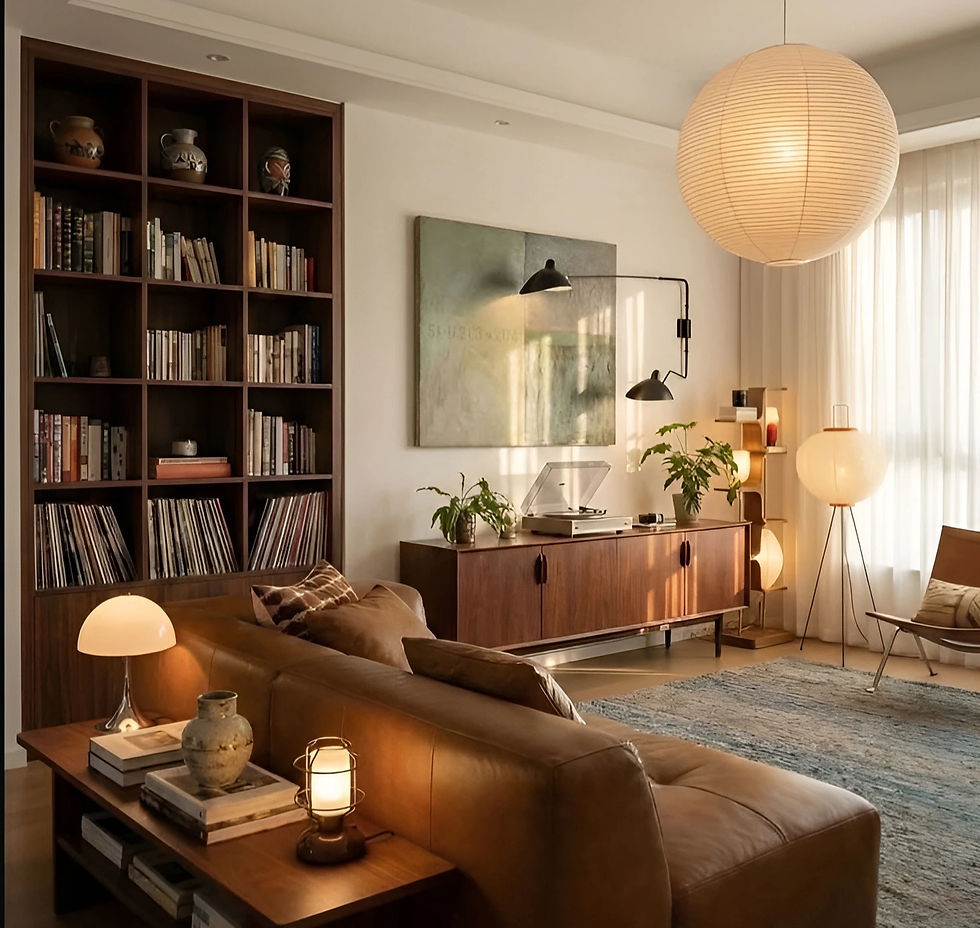
Whether you live with things in view or gently tucked away, the ritual remains the same: noticing. Adjusting. Honoring what makes you feel at ease.
Because home is not built through perfection.
It is built through care, repeated quietly, every day.


Comments