
Quiet nooks: designing spaces for reading and rest

We choose a corner, soften the light and allow ourselves to stay a little longer.
Not every home has a spare room waiting to be transformed into a reading lounge or retreat. But most homes have corners that are underused: the space beside a window, the end of a sofa, the quiet side of a bedroom, the landing at the top of the stairs.
A quiet nook doesn’t ask for square footage. It asks for intention. It’s a place that gently signals pause. A space that invites you to sit, lean back, open a book or simply do nothing for a moment.
These small zones matter because they give rest a physical address.
Choose the right corner
Start by noticing where you naturally slow down. Where does the light linger in the afternoon? Which corner feels calmer at night?
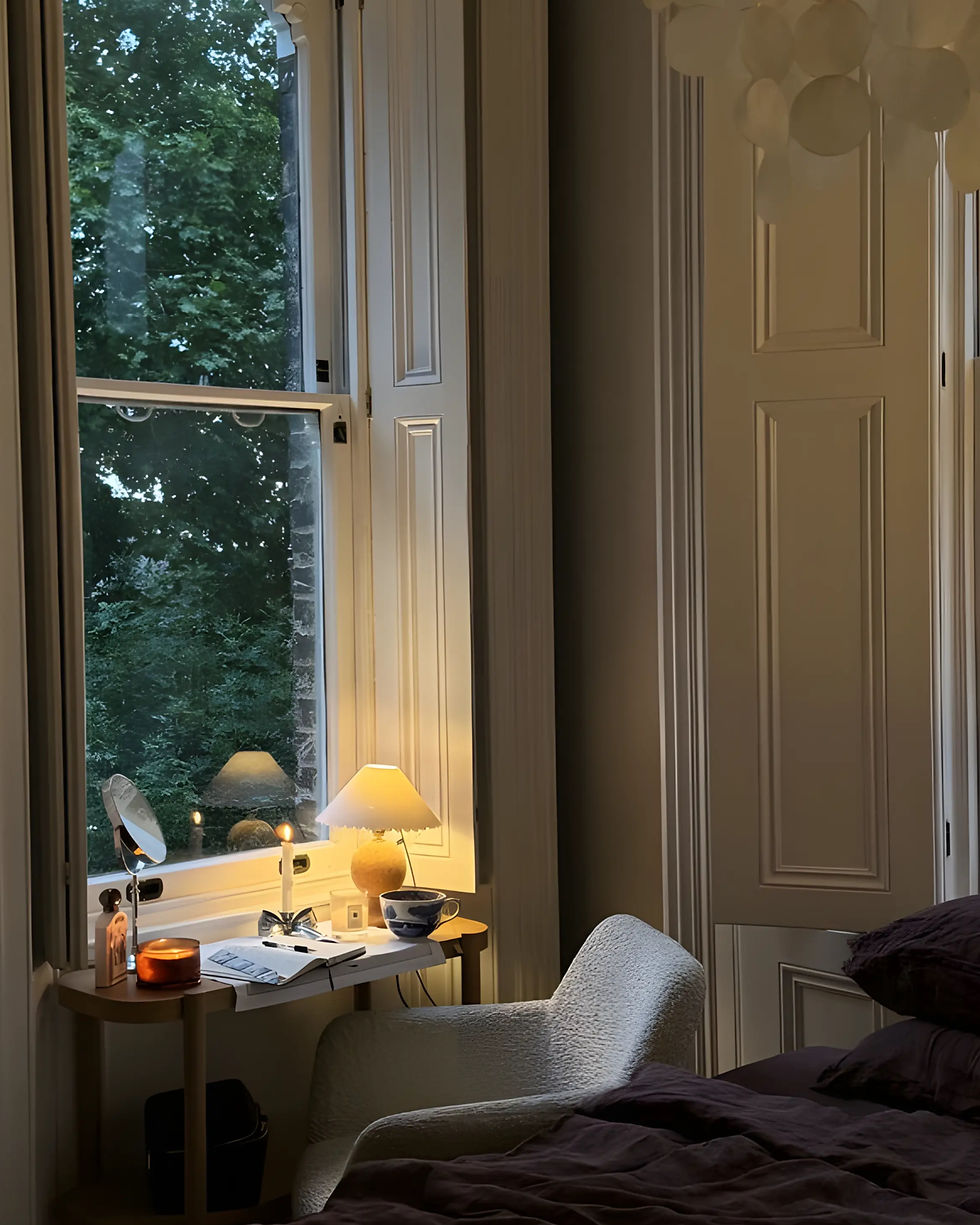
Often, the best spoken is one that’s slightly removed from movement, away from the kitchen path or the front door.
Windows are ideal, but not essential. A nook can live in a darker corner too, as long as it feels contained. The key is choosing a place where interruptions are minimal and where the body instinctively relaxes.
You’re not looking for perfection. You’re looking for a sense of ease.
Comfort first, always
The anchor of any quiet nook is where you sit.
An armchair with depth. A low chaise. A bench layered with cushions. Even the corner of a sofa can work if it’s treated intentionally. What matters is that the seat supports stillness rather than alert posture.
Add softness where the body meets the space: a cushion at the lower back, a folded throw over the arm, a wool blanket within reach. These details encourage staying longer without thinking about it.
If the seat invites you to shift, curl up or rest your head, you’re on the right track.
Choose light that doesn't demand attention
Good reading light is essential, but it doesn’t need to be harsh.
A floor lamp angled toward the page. A small table lamp placed slightly behind the shoulder. Warm bulbs rather than bright white ones. The goal is clarity without glare.


During the day, let natural light do most of the work. Keep curtains light and movable. In the evening, layer light so the nook feels held, not spotlighted. Light should support rest, not compete with it.
A surface for small things
Every quiet nook benefits from a small surface nearby.
A side table, a stool, a windowsill. Somewhere to place a book, a cup of tea, reading glasses, a notebook. This removes the need to get up and keeps the body settled.
The surface doesn't need styling, it needs function. A coaster. A lamp base. One or two objects that feel useful and familiar.
Less reaching means more resting.
Soften the environment with texture and sound
Quiet nooks work best when the surrounding space is softened.
A rug underfoot absorbs sound and anchors the area. Curtains, even light ones, help muffle echoes. Textiles slow the space down.

Sound matters too. Some nooks welcome silence. Others benefit from low background noise, music played softly, the hum of the house, rain against the window. Choose what feels steady rather than stimulating.
Turn a corner into yours
A nook becomes inviting when it feels claimed.
This doesn’t require decoration. It requires presence. A book you hold close to your heart. A pencil tucked inside. A blanket you use every evening. These signals tell the body this space is meant to be used, not just admired.
Avoid overfilling the area. One or two personal items are enough. The aim is familiarity, not display.
A nook should look slightly lived-in. That’s how it stays welcoming.
Let the nook evolve
Quiet nooks don't need to look the same every day.
In the morning, it might be a place for coffee and light reading. In the afternoon a spot to pause in between tasks. In the evening, a comforting corner to listen to the melody of an old record and soften the body before sleep.


Allow the setup to shift. Move the lamp. Change the blanket. Bring a cushion from another room. These adjustments keep the nook responsive to your needs.
A good nook adapts. It doesn’t insist.
Rest as shared permission
Even though quiet nooks are personal, they influence the whole home.
When guests see a space dedicated to rest, it subtly gives permission to slow down. They may not sit there themselves, but they feel the intention behind it.
A home with places to pause feels more generous. Less rushed, more human.
The purpose of a quiet nook
Designing a quiet nook isn’t about productivity or aesthetics. It’s about creating conditions where rest feels allowed.

In a world that often asks us to keep moving, these small spaces offer a counterpoint. A chair that waits. A light left on. A book within reach.
Consider your quiet nook as an everyday ritual. Not an escape, but an anchor. A place where time loosens, hands rest and the home quietly does what it’s meant to do: hold you.


Comments