
The quiet usefulness of wooden things

Keep one wooden thing within reach, and you will never feel entirely alone at home.
There is a particular quiet that wood carries. Not silence, but a softened sound.
The way a wooden spoon rests against the rim of a pot. The low knock of a drawer closing. The muted weight of a table under your palms.
Unlike glass or steel, wood does not shine to be seen. It absorbs light. It warms it. In the early morning, when the house is still and the air feels pale, wooden surfaces hold a kind of visual warmth. They steady the room.

This is why old European homes, whether alpine cottages or city apartments, so often leaned on wooden floors, beams, bowls, and benches. Not for decoration alone, but for atmosphere. Wood makes a space feel lived-in before anyone has even sat down.
It is useful. Yes.
But it is also reassuring.
What wood communicates
Every material speaks, if we pay attention.
Marble communicates permanence. Steel communicates precision. Glass communicates openness.
Wood communicates patience.
It carries time in its grain; rings that mark seasons of growth, drought, recovery.
When you bring wood into your home, you are placing something organic into your daily rituals. Something that once stood in weather. Something shaped slowly.


That is why wooden objects rarely feel cold or transactional. They feel handled. Meant to be used. Allowed to age.
Scratches do not ruin them. They soften them.
In a home that values warmth and welcome, this matters. A wooden table marked by shared meals says: you are not the first to sit here, and you will not be the last.
The most useful wooden things
Wood is not precious in the fragile sense. It asks to participate.
In the kitchen, start small:
A solid wooden spoon for soups and sauces.
A cutting board that stays on the counter, not hidden away.
A small wooden salt cellar with a lid that lifts easily.


These are objects your hands will meet daily. Over time, they take on the sheen of use, a quiet polish that cannot be purchased.
In the living space:
A low wooden stool that can move where it’s needed.
A simple tray for tea or water.
Frames in natural oak or walnut rather than high gloss finishes.


In the entryway, your own warm foyer:
A wooden bowl for keys.
A bench to sit and remove shoes.
Hooks that feel sturdy and warm to the touch.


Notice how each of these items does something practical. They are not just ornamental gestures. They support movement. They hold weight. They serve. And usefulness is part of their beauty.
Caring for wood, caring for ritual
To live with wooden objects is to accept a small responsibility.
Oil your cutting boards. Wipe spills quickly. Let wet spoons dry upright. These are maintenance rituals, brief moments where you tend to the things that tend to you.
Living tip
A light rub of food-safe mineral oil once a month keeps kitchen wood from drying. Use a soft cloth to restore the surface in circular motion. The scent is faint, clean. A few quiet minutes at the end of the day.

This is the kind of domestic care that slows time rather than consumes it.
When something chips or cracks, consider repair before replacement. Wood invites mending. Sanding an edge smooth. Tightening a screw. These acts deepen attachment and you slowly begin to feel that your home is not assembled, but cultivated.
The emotional weight of natural materials
There is also a sensory truth: wood feels alive.
Even in winter, it is rarely icy to the touch. Even in summer, it does not glare. It adapts gently to temperature and light. It belongs in every season.
In a world that often feels polished and fast, wooden things counterbalance. They remind us that aging is natural. That use leaves marks. That softness can be strong.
When guests enter a home filled with wood they sense something before they can name it: a table scarred by dinners, shelves lined with worn books, a carved spoon resting by the stove.
Stability. One of the most generous forms of hospitality.
Choosing wood with intention
If you are beginning to bring more wood into your home, choose slowly.
Look for solid wood rather than veneer when possible.
Notice the weight in your hands.

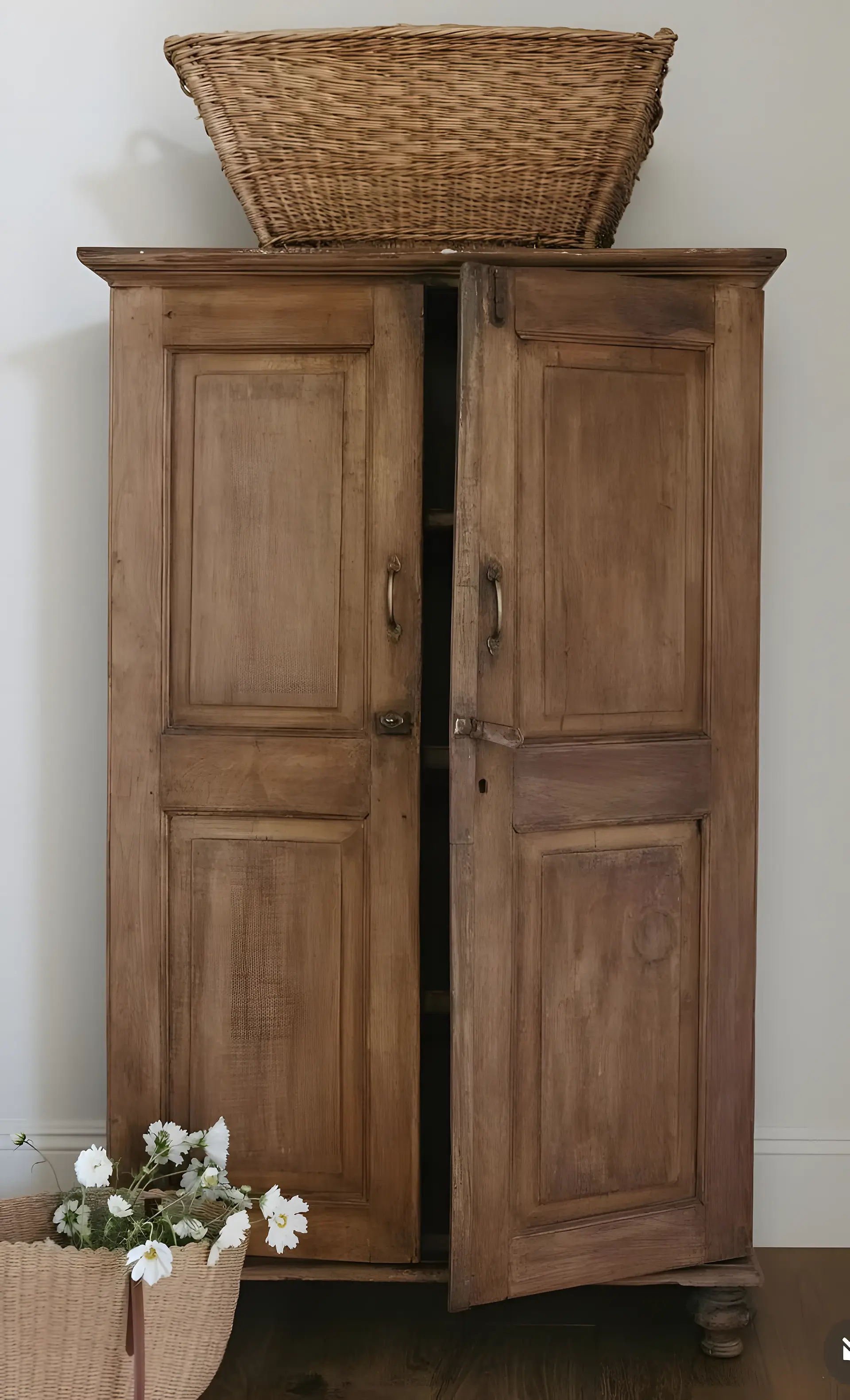
Pay attention to grain; do you prefer straight lines or visible knots? Lighter woods lift a dark room. Deeper tones anchor a bright one.
You do not need to match everything. In fact, slight variation feels more natural. A walnut table beside oak floors. A pale ash spoon in a darker bowl. Harmony does not require uniformity.
Let the pieces gather over time. A market find. A handmade gift. A family object passed down. The mix tells a story that newness alone cannot.


A quiet companion
Wooden things rarely demand attention.
They sit. They hold. They support. And in doing so, they shape the emotional temperature of a home.
In the end, their usefulness is relational. They make daily rituals feel anchored: chopping herbs, setting the table, placing keys in a bowl at the end of a long day.
Small moments. Repeated.
This is how a house begins to feel steady.


Comments