
Shoes left at the door
Before fully stepping inside, we pause, loosen our laces and let the day stay where it belongs.
The space just inside a door is often small and easily overlooked. It might just be a mat, a bench, a quiet corner by the wall. And yet, this threshold holds weight. It marks the moment the outside becomes inside, where movement gives way to rest.
Leaving your shoes at the door is not only about cleanliness, but pace. It asks us to gently stop for a second before entering the home, rather than carrying the rush of the street inside.
In many cultures, removing shoes is a sign of respect, for the space, the people inside, for what the home represents. Even when practised informally, this simple gesture carries meaning, allowing the body and the mind to shift.
What we carry in
Shoes collect more than dirt. They carry the day’s residue: streets walked, errands run, conversations had, time spent elsewhere. Leaving them at the door becomes a way of setting those things down too.
Practically, it keeps the floor cleaner, textiles fresher and the home easier to maintain. But emotionally, it does something quieter: it draws a boundary. What happened outside doesn't need to follow us everywhere.
A home that invites shoes to be left at the door subtly communicates care. For the space, yes, but also for the people who live there.
Creating a place to arrive
Rituals only last when they are supported.
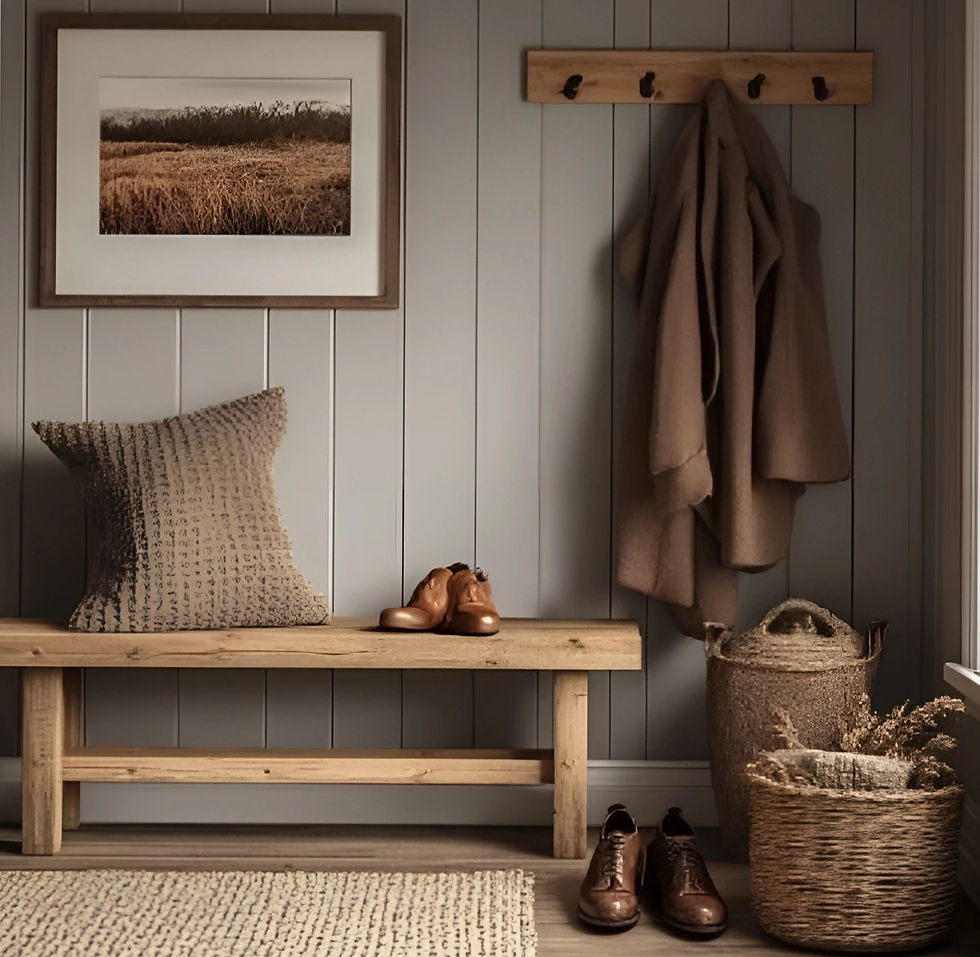
A simple bench to sit on while removing shoes. A basket to keep pairs together. Hooks or shelves nearby for coats and bags. These small arrangements turn a habit into practice.

It doesn't need to be elaborate: even a well-placed mat and an open corner are enough. What matters is that the gesture feels intentional rather than inconvenient.
And when guests arrive, the setup quietly guides them. No instructions needed. The space explains itself.
Cleanliness without obsession
Leaving shoes at the door is not about mere perfection. It is about care.
A home where shoes are removed still shows signs of life, scuffed wood, softened rugs, marks that come from use. The goal isn't preservation, but ease. Less sweeping. Less noise. Less grit underfoot.
Bare feet, socks, or house slippers change how we move through a space. Steps soften. The body relaxes. There is a sense of settling rather than passing through.
Rituals that shape behaviour
For children especially, thresholds are teachers.
Removing shoes becomes one of the first rituals they learn: a quiet lesson in respect, awareness, and shared responsibility. It shows that home is different from the outside world, that it deserves care.

Over time, this habit extends beyond cleanliness. It becomes a way of arriving with attention. Of noticing where you are and how you enter a space.
When guests cross the threshold
Inviting guests to leave their shoes can feel delicate. The difference lies in how it's offered.
A clear place to sit. Clean floors. A basket with house slippers or a few pairs of soft, fuzzy socks in neutral tones. A simple “make yourself comfortable.” These details turn a rule into hospitality, shifting the gesture from request to care.
When guests remove their shoes, something changes. Conversations soften. Bodies relax. The visit feels less formal, more grounded.
They are no longer passing through. They are staying.


The quiet lesson of the doorway
Shoes left at the door remind us that how we enter matters. That arrival can be soft. That the doorway is never just a passage, but an invitation to step inside with intention.
And like many home rituals, this one travels.
Guests notice it. They feel the calm it creates. Later, they might adopt a version of it themselves: a mat by the door, a pause before entering, a new awareness of thresholds.
Rituals don’t spread through instruction. They spread through experience.


Comments